

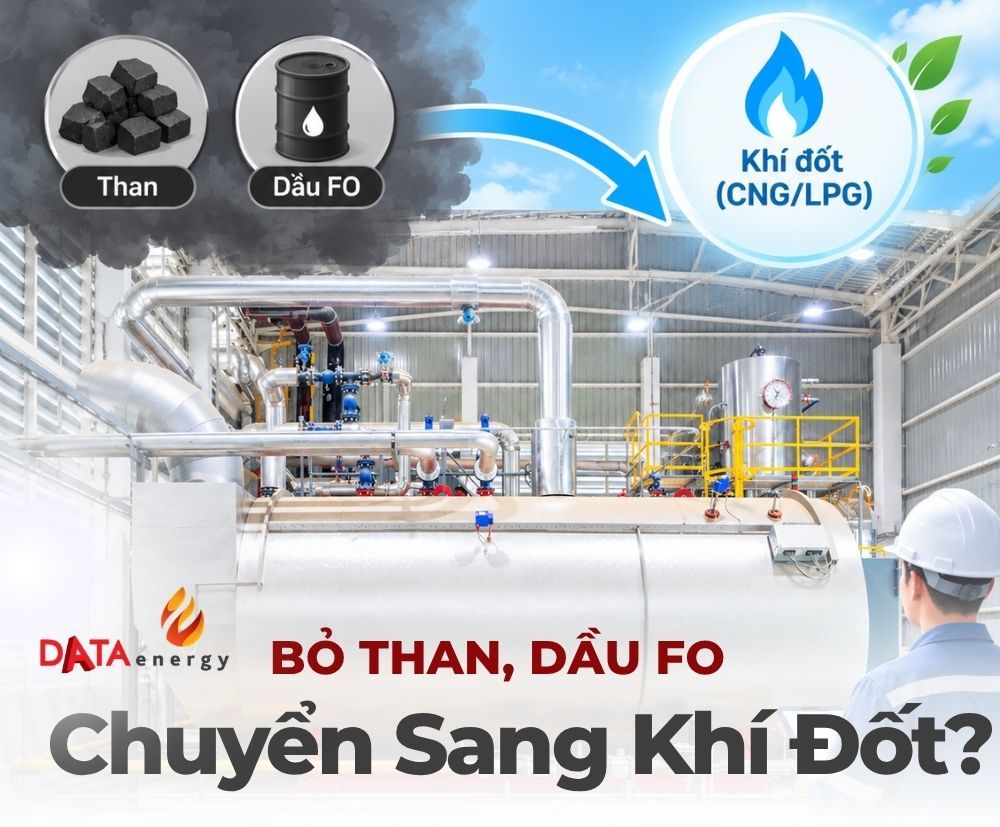
Industrial Boilers: Why Factories Are Abandoning Coal & Fuel Oil for Gas
13/10/20261. Tightening Environmental and Legal Regulations
Before 2015, most Vietnamese industrial boilers ran on coal or fuel oil — low cost, widely available. That picture is changing rapidly.
QCVN 19:2009/BTNMT sets emission limits for SO₂, particulates and NOₓ from industrial facilities. Coal and FO combustion generates emissions that exceed these thresholds without costly flue-gas treatment systems.
Decree 105/2025/NĐ-CP tightens fire safety requirements — design approval, inspection and operating standards — for coal yards and FO tanks. Compliance costs have risen significantly.
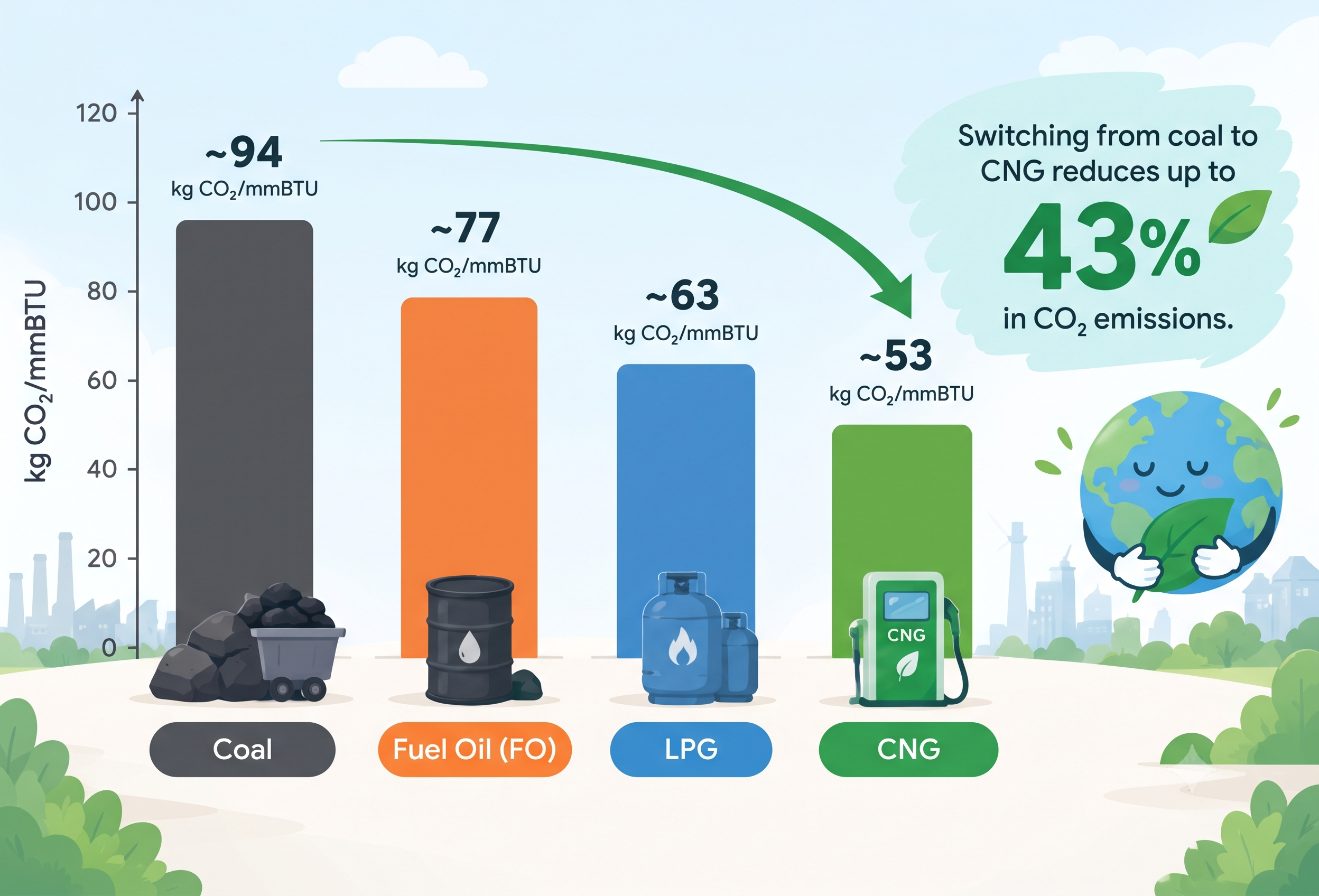
CO2 EMISSION COEFFICIENT FOR FUELS
2. Export Supply Chains Now Require Scope 1 Emissions Control
Scope 1 refers to greenhouse gas emissions directly from a factory's own operations — including boiler combustion. This is now a mandatory ESG disclosure item and is increasingly scrutinised by international buyers.
From 1 January 2026, the EU's CBAM (Carbon Border Adjustment Mechanism) imposes a carbon levy on imports with high embedded carbon — including steel, aluminium, cement and fertilisers. Exporters to the EU must demonstrate low Scope 1 emissions or face additional carbon costs at the border.
Beyond CBAM, major buying groups from the US, Japan and South Korea — especially in textiles, footwear and electronics — are embedding emissions reduction criteria directly into procurement contracts. Factories still running on coal risk losing competitive standing in long-term tender processes.
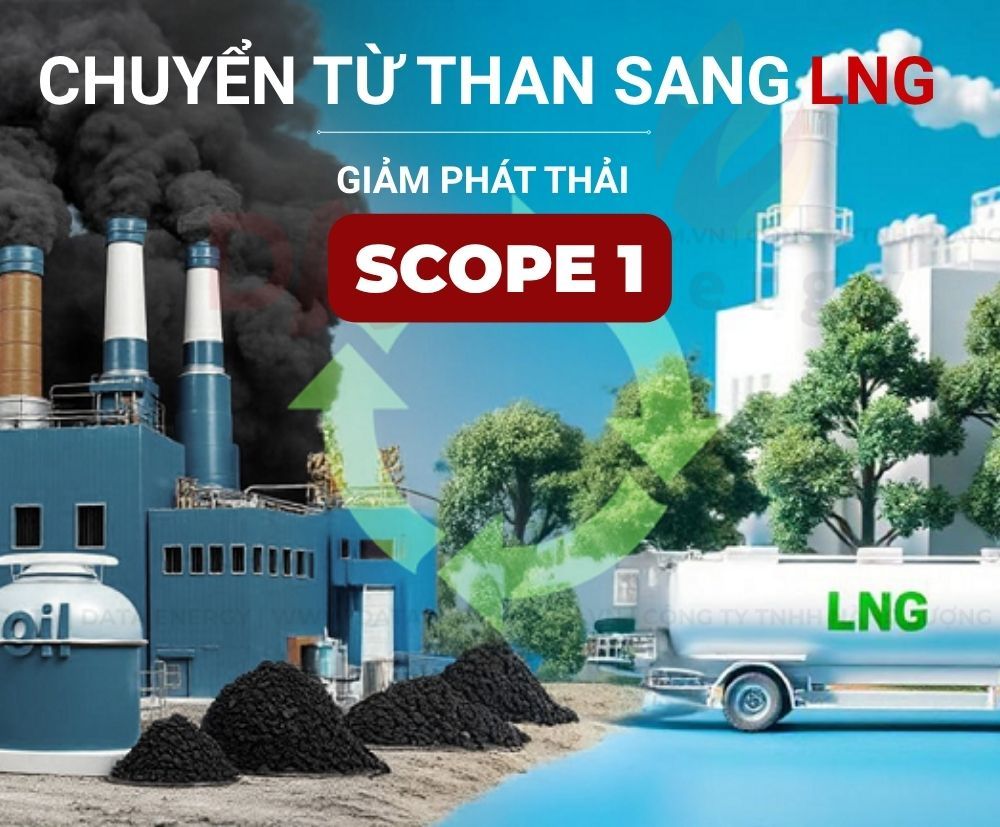
Switching from Coal and Fuel Oil to Gas: How Much Can Exporting Factories Reduce Scope 1 Emissions?
3. The Hidden Costs of Coal and Fuel Oil Are Often Overlooked
Many factories compare fuel prices per tonne and conclude coal is cheaper than gas. When full operating costs are tallied, the picture changes completely.
|
Cost item |
Coal / Fuel Oil |
Gas (LPG/CNG) |
|
Storage & yard |
High — large coal yard or FO tank required |
Low — compact tank or filling station |
|
Labour |
High — coal handling, ash cleaning |
Low — highly automated operation |
|
Boiler maintenance |
High — soot and ash damage burners |
Low — clean combustion, minimal residue |
|
Thermal efficiency |
70–80% (coal) / 75–82% (FO) |
85–92% — 10–15% less waste energy |
|
Flue-gas treatment |
Costly dust/SO₂ filtration required |
Not required — cleaner combustion |
|
Regulatory risk |
High — environmental & fire-safety inspections |
Low — when compliant with Decree 105 |
When fully accounted for, many factories find that total boiler operating costs on coal run 20–35% higher than on LPG or CNG — even when the per-mmBTU fuel price of gas appears higher on paper.
4. Industrial Gas Infrastructure Now Covers the Whole Country
One major barrier to switching has been concern about supply reliability — can gas be consistently delivered? In practice, infrastructure today is sufficient to serve most industrial zones:
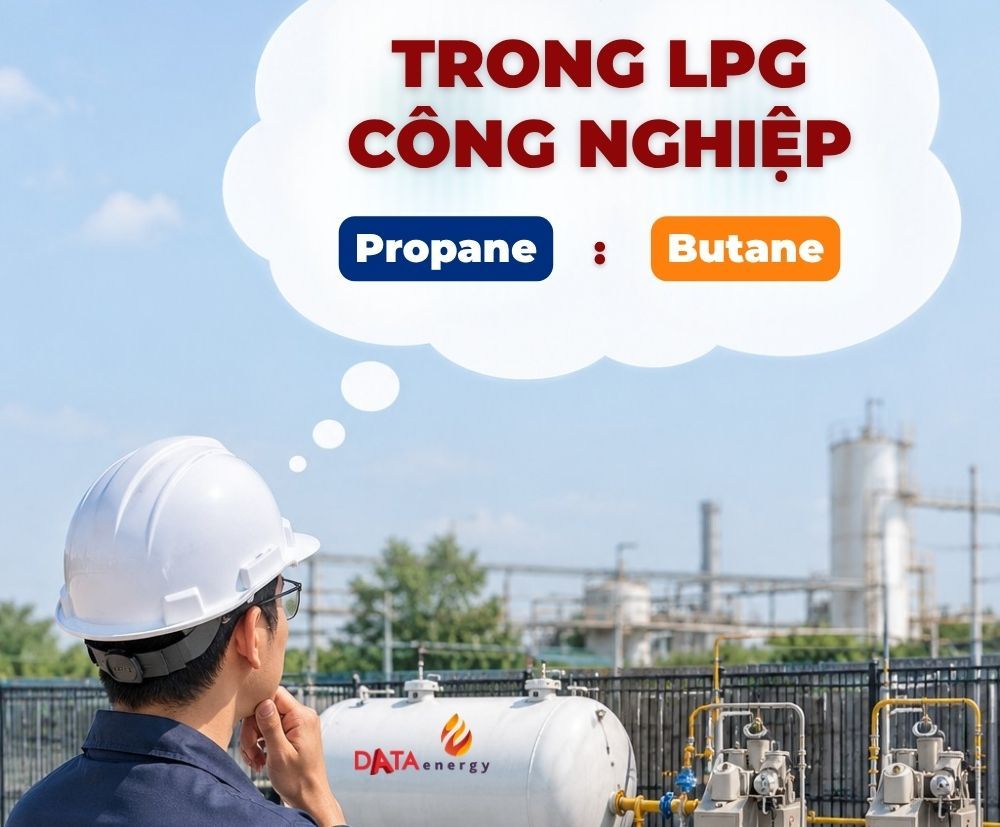
● LPG (liquefied petroleum gas): Delivered by cylinder truck or tanker directly to the factory. Suitable for all locations — from large industrial parks to remote provinces. Tank sizes from 5 m³ to hundreds of m³.
● CNG (compressed natural gas): Transported by CNG trailer to an on-site filling station. PV GAS CNG now supplies multiple industrial zones from Hanoi to Ho Chi Minh City and the Southeast provinces.
● LNG (liquefied natural gas): Best suited to large consumers (typically above 50–100 LPG-equivalent tonnes/month). Thi Vai and Son My terminals are the two operational LNG import hubs in Vietnam.
|
⚠️ Important note on supply chain Both LPG and LNG are imported fuels — they share the same upstream supply risks. Geopolitical disruption (such as the Strait of Hormuz conflict that intensified in 2026) affects LPG import prices indexed to the Saudi Aramco CP. Businesses should factor this into long-term fuel planning. |
LPG, CNG or LNG — Which Is Right for Your Boiler?
No single gas type is optimal for every factory. The table below helps identify the right choice by consumption scale:
|
Criteria |
LPG |
CNG |
LNG |
|
Scale |
Small–medium (< 50 tonnes/month) |
Medium (20–100 LPG-equivalent tonnes/month) |
Large (> 100 LPG-equivalent tonnes/month) |
|
Fuel price (Aug 2026) |
Volatile — CP-linked, currently elevated by geopolitics |
~17.83 USD/mmBTU — more stable |
Per import lot — contact supplier directly |
|
Upfront investment |
Lowest — standard LPG tank |
Medium — on-site CNG filling station |
Highest — cryogenic tank, 3–5x LPG cost |
|
Supply reliability |
High — flexible tanker delivery |
High — CNG trailer on demand |
Stable near Thi Vai & Son My terminals |
|
Conversion from coal/FO |
Easiest — LPG burners widely available |
Burner adjustment needed — feasible |
Requires thermal system redesign |
|
Industry fit |
Food, textiles, plastics, SMEs |
Dyeing, chemicals, materials manufacturing |
Steel, aluminium, glass, cement at scale |
Note: LPG pricing follows the monthly Saudi Aramco Contract Price (CP). Under normal market conditions, LPG is often cost-competitive with or cheaper than CNG. As of August 2026, LPG prices are elevated due to the Hormuz Strait conflict.
Frequently Asked Questions About Switching Boilers to Gas
1/ Can existing coal or fuel oil boilers be converted to gas?
Yes. Most industrial boilers can be retrofitted by replacing or adjusting the burner. Retrofit costs are typically far lower than purchasing a new boiler. Several Vietnamese boiler manufacturers also offer on-site retrofit services.
2/ How much space is needed for a gas tank or filling station?
LPG: a 10 m³ tank requires approximately 20–30 m² of safety clearance. CNG: a trailer filling station needs 50–100 m² for vehicle access. LNG: a cryogenic tank needs 100–200 m² plus a vaporisation system.
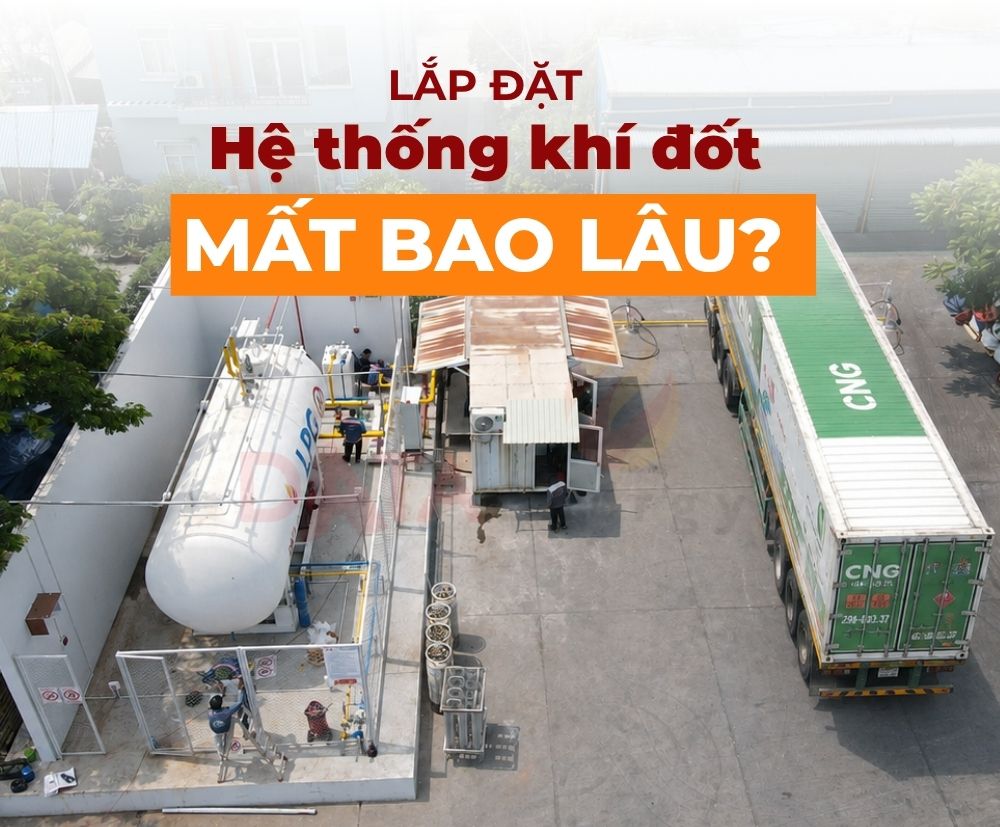
3/ How long does installation take?
LPG and CNG systems: typically 4–7 weeks (survey, design, installation, certification). LNG: 7–12 weeks due to more complex technical requirements.
4/ What permits are required?
Industrial gas systems fall under Decree 105/2025/NĐ-CP on fire prevention and safety. Design approval, equipment certification and a commissioning sign-off are required before operation. A reliable gas supplier typically manages all permit procedures on your behalf.
Xem thêm:
LEARN ABOUT INDUSTRIAL BOILERS
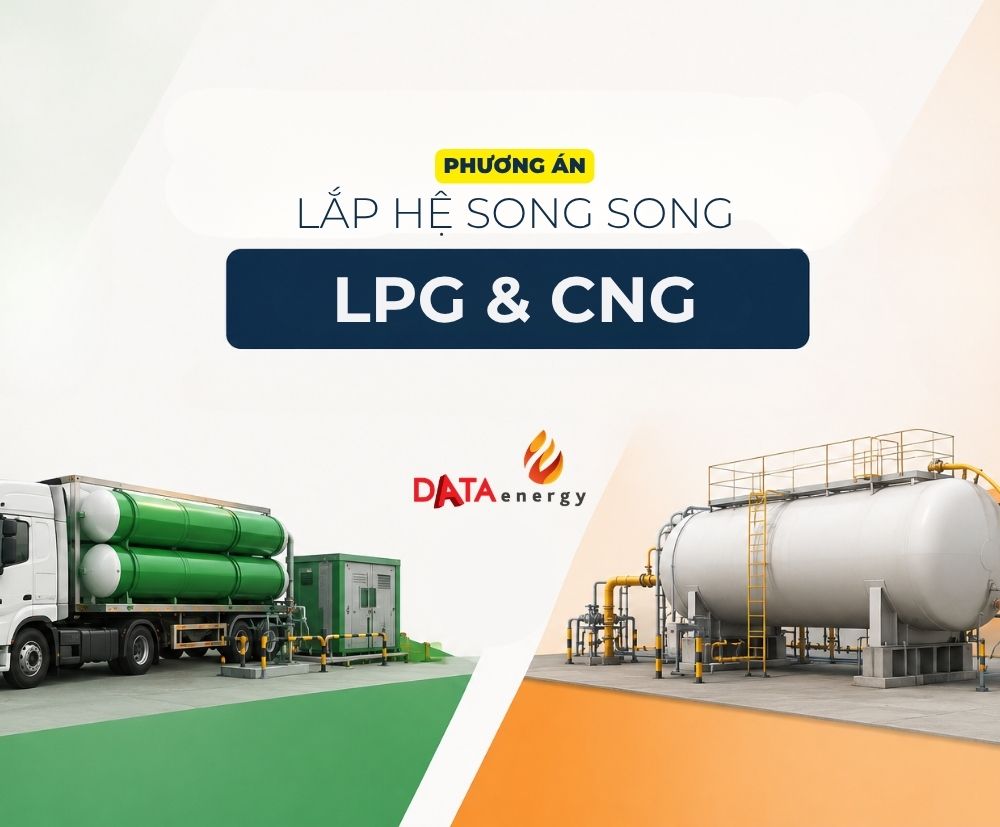
Parallel LPG + CNG supply system: A backup gas source option for the production plant.
Hotline: 028.62757005 | Ms. Oanh: 0985.142.050

DATA ENERGY COMPANY LIMITED (DATA Energy)
- Supply LPG, CNG, LNG.
- Consult, Design, Install Industrial Gas System.
- Invest Gas System (LPG, CNG, LNG) for the factory.
Latest news
Related Posts